Backtest vs Live
Backtest ↔ Live — Behavioural Convergence
What "Convergence" Means
In the field of algorithmic strategies, the greatest discrepancy usually appears when a strategy transitions from historical simulation (backtest) to real-world application (live).
This page presents what we call convergence: That is, whether the behaviour of the strategy remains consistent when the environment changes.
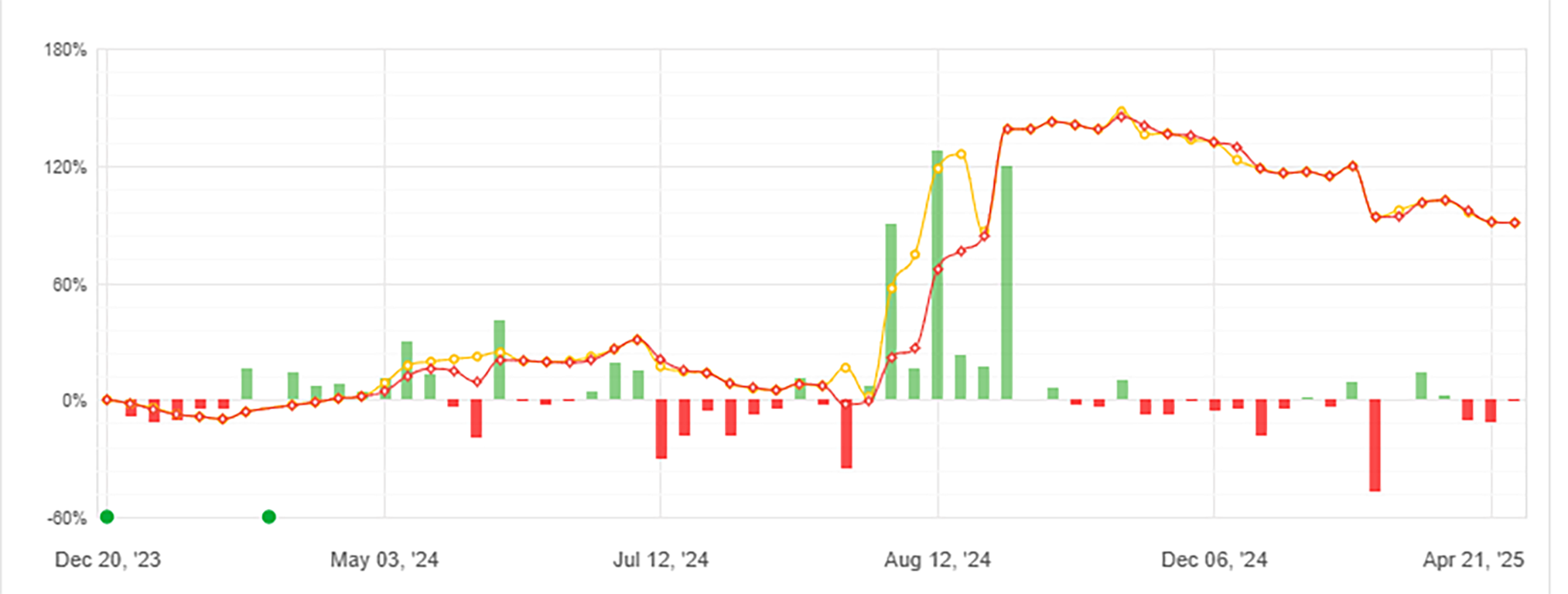
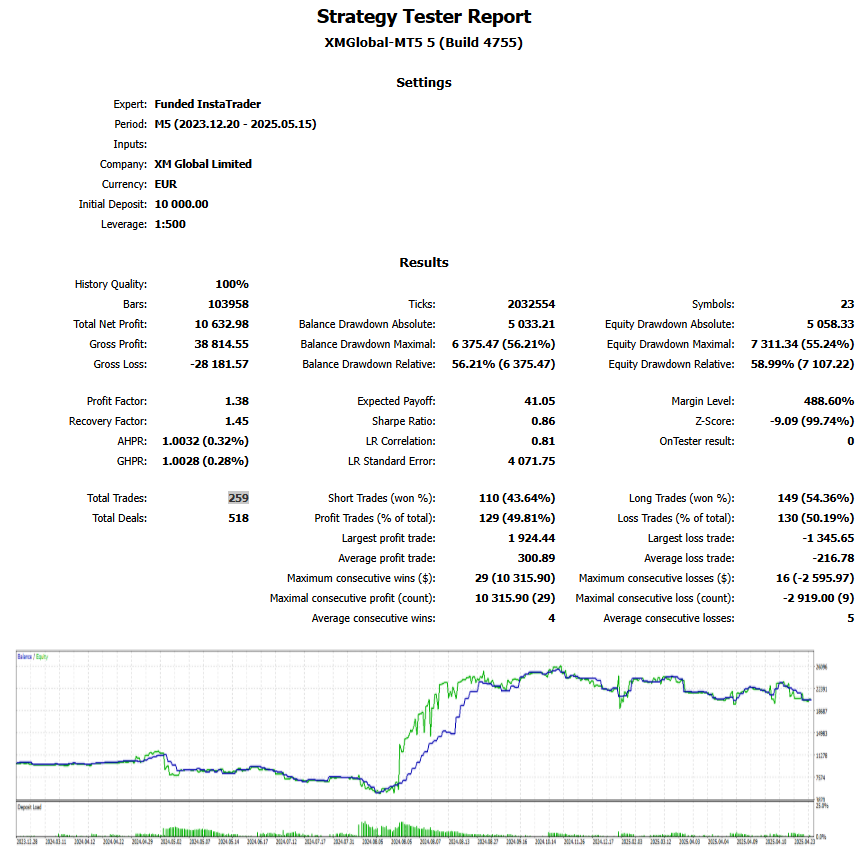
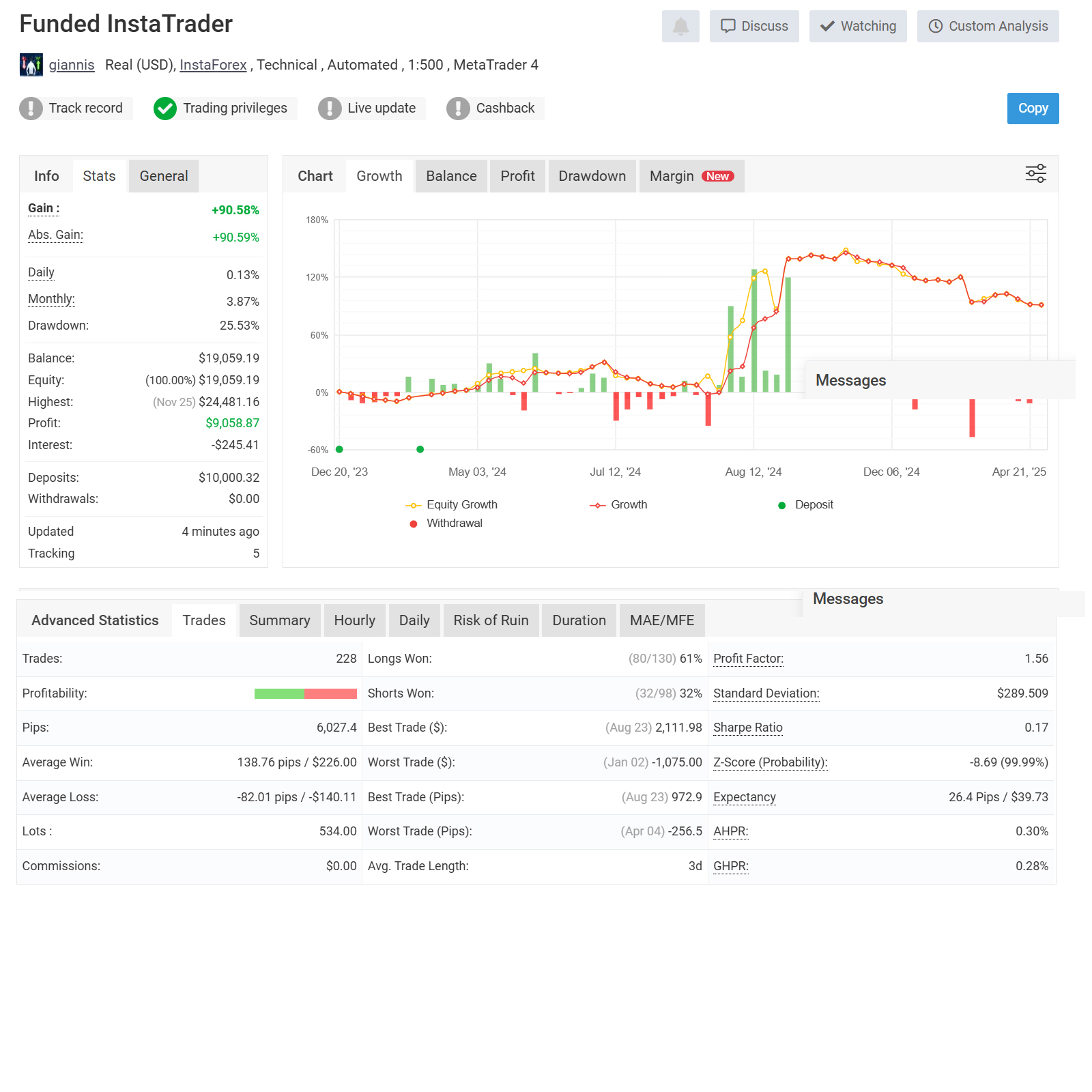
Convergence concerns not just the matching of gains or trade timing, but also the maintenance of a similar risk structure, rate of progression, and recovery logic (drawdown & recovery), which is a key indicator that the strategy has not been built exclusively for historical data.
Backtest Equity Curve

Live Equity Curve
Why Convergence Matters
Convergence reduces one of the main risks in algorithmic strategies: the risk that the historical result is the product of overfitting.
When a strategy displays similar behaviour both in historical tests and in live application, the probability increases that its logic is robust and not adapted to specific past conditions.
Funded — Backtest Snapshot
Funded — Live Snapshot
Limitations & Honest Assessment
The existence of convergence does not constitute a guarantee of future performance and does not eliminate investment risk.
However, the absence of convergence would be a clear indicator of inconsistency. For this reason, convergence is used here as a tool for evaluating the quality and maturity of the strategy, not as a promise of results.
⚠️ ForexBot.gr is an infrastructure for evaluating and monitoring the behaviour of the automated system, with emphasis on consistency, transparency and long-term verifiability.
Νομική Αποποίηση Ευθύνης
⚠️ Ενημερώνουμε ότι η νομική αποποίηση ευθύνης ενημερώθηκε τον Ιούνιο 2025. Όλοι οι επισκέπτες καλούνται να την επανεξετάσουν.
Η παρούσα ιστοσελίδα αποσκοπεί αποκλειστικά και μόνο σε γενικής φύσεως ενημέρωση του επισκέπτη. Οι πληροφορίες που περιέχονται ή παρουσιάζονται στην ιστοσελίδα αποτελούν προϊόν προσωπικής εργασίας του συντάκτη (ιδιοκτήτη της ιστοσελίδας) και δεν είναι (ούτε πρέπει να εκληφθούν από τον αναγνώστη ως) σύσταση ή συμβουλή ή προτροπή ως προς τη διενέργεια οποιασδήποτε συναλλαγής σε χρηματοπιστωτικά ή άλλα επενδυτικά μέσα, όπως επίσης οι πληροφορίες που περιέχονται στην ιστοσελίδα δεν είναι (και δεν πρέπει να εκλαμβάνονται από τον αναγνώστη) ως υπόδειξη ευκαιρίας για τη διενέργεια οποιασδήποτε χρηματιστηριακής ή άλλης συναλλαγής, ούτε για τη σύναψη οποιασδήποτε συμβατικής σχέσης με οποιοδήποτε μέρος.
Η τοποθέτηση κεφαλαίων σε χρηματοπιστωτικά ή άλλα συναφή μέσα και όλες οι σχετικές επενδύσεις αποτελούν εξαιρετικά ριψοκίνδυνη δραστηριότητα, καθώς καμία επένδυση δεν έχει εγγυημένα αποτελέσματα και οι τυχόν παρελθοντικές αποδόσεις δεν αποτελούν ένδειξη, ούτε εγγυώνται, τυχόν μελλοντικές αποδόσεις.
Οποιαδήποτε συναλλακτική δραστηριότητα σε επενδυτικά ή άλλα μέσα, αυτοματοποιημένη ή μη, που μπορεί να παρουσιάζεται στην παρούσα ιστοσελίδα, μέσω (ενδεικτικά και όχι περιοριστικά) γραφημάτων, φωτογραφικών δεδομένων ή/και βίντεο, αντανακλά αποκλειστικά και μόνο προσωπικές επενδυτικές επιλογές του συντάκτη και ιδιοκτήτη της ιστοσελίδας και οι εν λόγω δραστηριότητες παρουσιάζονται αποκλειστικά και μόνο για σκοπούς πληροφόρησης.
Ο συντάκτης και νόμιμος ιδιοκτήτης της ιστοσελίδας δεν φέρει καμία ευθύνη για τον τρόπο με τον οποίο μπορεί οι παρουσιαζόμενες πληροφορίες να χρησιμοποιηθούν από τον αναγνώστη, ενώ ο αναγνώστης αναγνωρίζει ρητά και ανεπιφύλακτα την αποκλειστικά ενημερωτική φύση της παρούσας ιστοσελίδας.
Ο συντάκτης και νόμιμος ιδιοκτήτης της ιστοσελίδας ρητά δηλώνει, και ο αναγνώστης ρητά και ανεπιφύλακτα αποδέχεται, ότι ουδεμία απολύτως ρυθμιζόμενη επενδυτική υπηρεσία παρέχεται μέσω της ιστοσελίδας.
🔍 Δες την πλήρη Τεχνική Πολιτική Αποποίησης
🔍 Δες τους Όρους Χρήσης τηςΙστοσελίδας