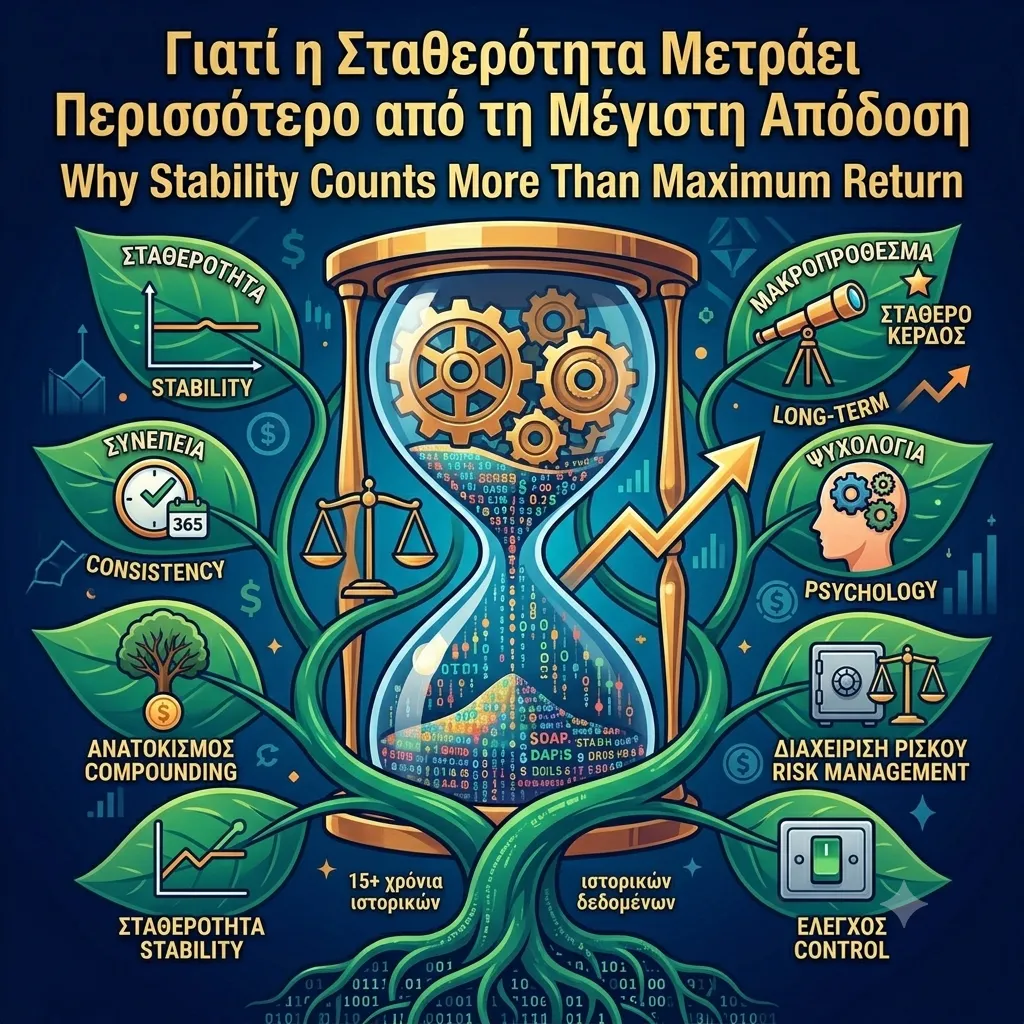
Every strategy looks excellent in a rising, calm market. The real test comes in crises — where volatility explodes, liquidity vanishes and panic takes over.
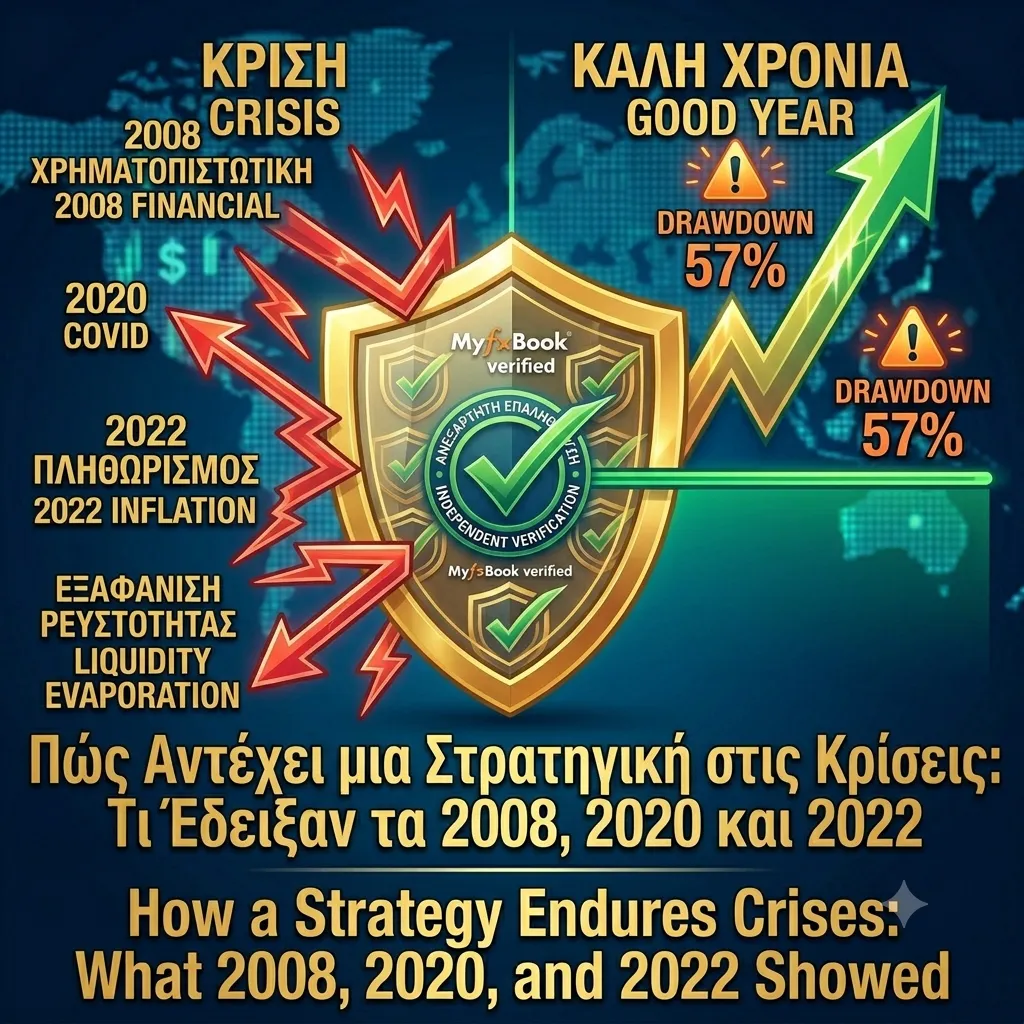
The crises of 2008 (financial collapse), 2020 (COVID) and 2022 (energy and inflation turmoil) were completely different from each other. That is exactly what makes them a valuable test sample: a strategy that survives all three is not adapted to a single type of crisis.
What does "survive" mean? Not necessarily that it profits in every crisis. It means it isn't destroyed — that the drawdown stays within the limits that have been set, and that the system keeps functioning afterward.
One way a well-designed strategy achieves this is by avoiding execution inside extreme volatility. Instead of trying to "catch" the move amid chaos, it waits for the extreme instability to subside and acts when conditions are more predictable.
In addition, risk management at the portfolio level — not individually per trade — and the avoidance of techniques like martingale, are what keep the system alive when everything around it collapses.
When evaluating historical data, don't look only at total performance. Focus on the worst periods. That is where the truth hides about whether a strategy is resilient or merely lucky.