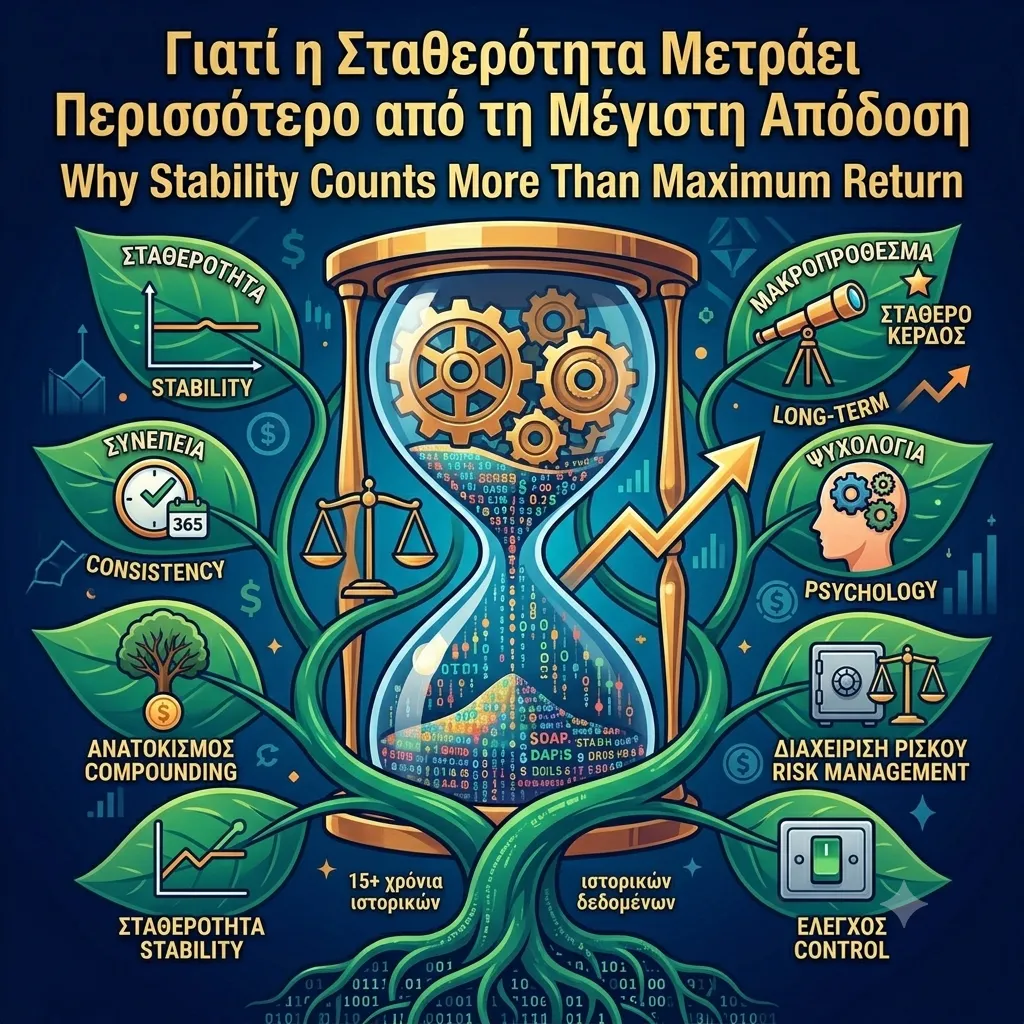
A common point of confusion: when a system offers many versions, many think these are different strategies. Often they aren't. They are the same strategy, with a different allocation of risk.
What does that mean? The logic, the entry signals and the exit criteria remain identical across all versions. What changes is one thing: how much capital is risked on each move. This single variable dramatically changes the return and risk profile.
Think of it as the same driver driving the same car at three different speeds. The route is the same, the technique is the same — only how hard they press the gas changes. At 80 km/h they arrive slowly but safely. At 200 they arrive fast but with much greater risk.
So a high-risk version may target very high returns with large drawdown, while a low-risk version targets modest but smooth returns with small drawdown. It is not "better" and "worse" — they are different tools for different people.
The advantage of this approach: it proves the edge is in the strategy, not in a specific risk level. If the same system works consistently across many risk profiles, then the underlying pattern is structural — and you can choose the version that fits your own tolerance, instead of forcing yourself onto a single number.