Important clarification before we begin: the following is general information, not legal or tax advice. For your personal case, consult an accountant or tax advisor.
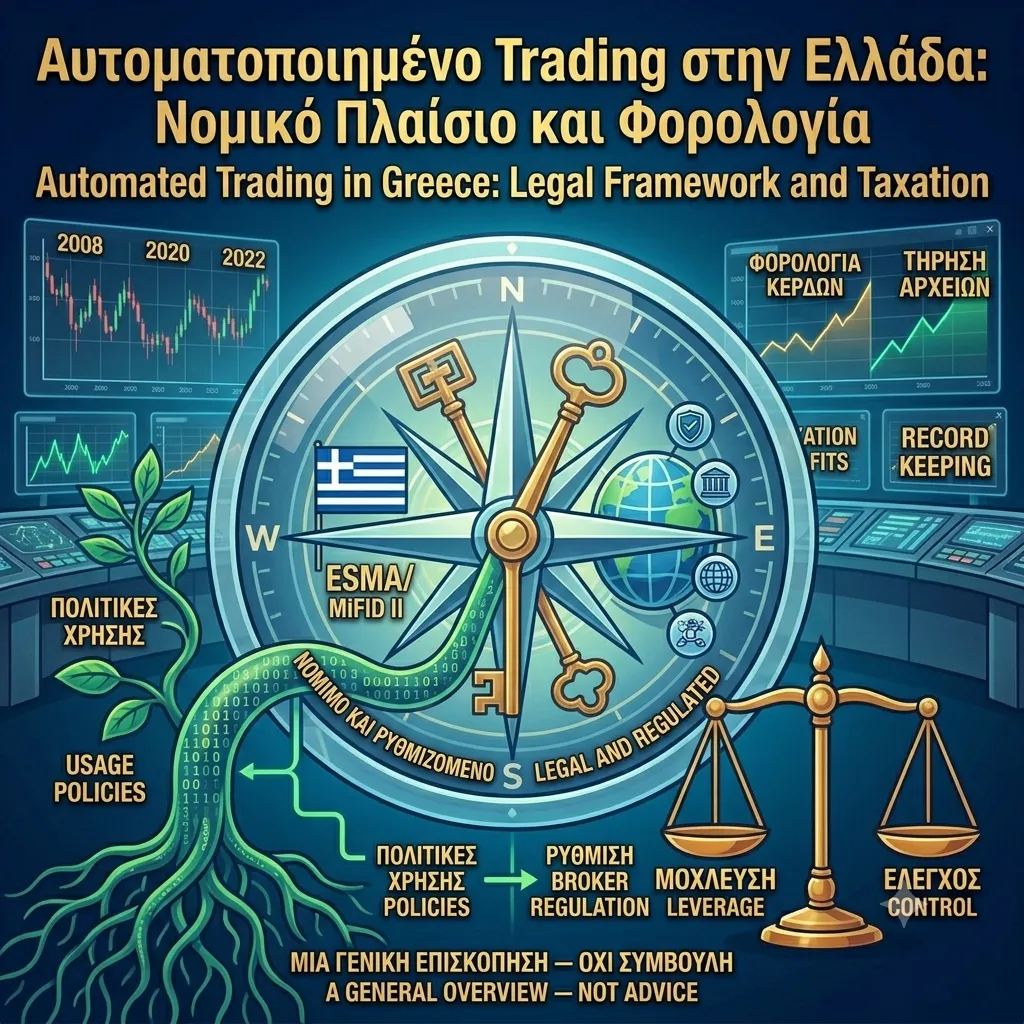
In Greece, trading forex and CFDs is legal for individuals. Most Greeks use brokers regulated either in the EU (under the ESMA/MiFID II framework) or internationally. Choosing a regulated broker is a basic protective measure.
Regarding leverage: brokers under ESMA are usually limited to 1:30 for retail clients, as an investor protection measure. International brokers outside the EU may offer higher leverage, but under a different — and often less strict — regulatory framework.
On the tax side, profits from such trades are generally considered taxable income and must be declared. The exact method of taxation, the rates and income categories may change and depend on the details of your activity. That is why proper record-keeping (trade history, deposits, withdrawals) is essential.
A point often overlooked: an automated system provided as a tool or as a strategy (and not as third-party fund management) does not in itself constitute a regulated investment service. This distinction matters for what obligations arise.
The conclusion: automated trading is entirely legal, but it comes with responsibilities — choosing a regulated broker, proper record-keeping, and declaring profits. Consult a professional for your own situation.