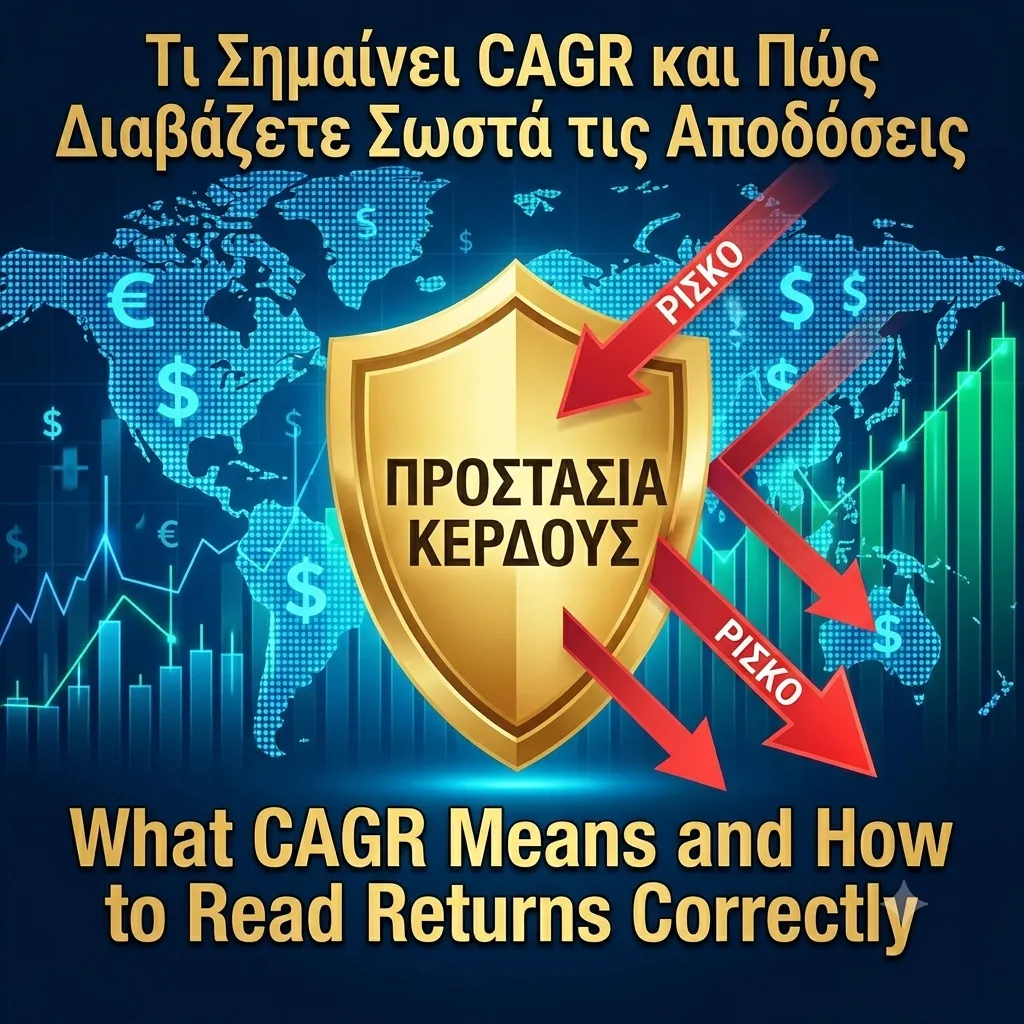
CAGR stands for Compound Annual Growth Rate. It is the steady annual rate an investment would need to grow from its initial to its final value, taking compounding into account.
Why isn't a simple average enough? Imagine a system that does +100% one year and -50% the next. The simple average says (+100 - 50)/2 = +25% per year. Sounds excellent. In reality? €100 becomes €200 and then €100 again. Your actual return over two years is zero. The CAGR here is 0%, not 25%.
This example shows why the average is misleading in volatile systems. CAGR captures what actually happened to your capital, because it accounts for the fact that each year builds on the previous one.
When you see a CAGR figure, immediately ask two things: over how many years it was calculated, and what drawdown accompanies it. A 30% CAGR over 15 years of data, with controlled drawdown, is very different from a 30% CAGR over 8 "lucky" months.
The stability of CAGR over time matters more than its height. A modest but steady figure, repeated across different market conditions, is more reliable than an impressive number that appeared once.